
Golf fitness demands a holistic approach, blending power, flexibility, and endurance.
A golf strength and conditioning program PDF offers structured training for peak performance and injury resilience on the course.
Why Strength & Conditioning is Crucial for Golf
Golf isn’t purely about technique; physical prowess significantly impacts performance. A well-designed golf strength and conditioning program PDF addresses the specific demands of the swing, enhancing power, stability, and preventing injuries. Increased core strength improves rotational movement, while lower body training boosts ground reaction force.
Furthermore, targeted exercises improve flexibility and endurance, crucial for maintaining consistency throughout a round. Ignoring physical conditioning limits potential and elevates injury risk.
The Demands of the Golf Swing: A Biomechanical Overview
The golf swing is a complex, full-body movement requiring sequential activation of muscles. A golf strength and conditioning program PDF must address this. It involves rotational power generated from the ground up, demanding core stability and lower body strength.
The swing also places significant stress on the spine and shoulders, necessitating flexibility and muscular endurance. Understanding these biomechanical demands is vital for effective training.

Assessing Golf Fitness
Golf fitness assessments pinpoint weaknesses impacting swing mechanics. A comprehensive golf strength and conditioning program PDF begins with evaluating mobility, stability, and power output.
Golf-Specific Fitness Assessment Components
A detailed assessment is crucial before starting any golf strength and conditioning program PDF. Key components include evaluating rotational power via medicine ball throws, core stability tests like planks, and flexibility assessments targeting hips and shoulders.
Furthermore, functional movement screens identify limitations impacting swing mechanics. Measuring single-leg balance and assessing thoracic spine mobility are also vital. These insights inform personalized program design, maximizing effectiveness and minimizing injury risk, ultimately enhancing performance on the course.
Identifying Movement Impairments & Muscle Imbalances
Prior to implementing a golf strength and conditioning program PDF, pinpointing limitations is essential. Common impairments include limited thoracic rotation, weak glutes, and tight hip flexors. Assessing movement patterns reveals asymmetries impacting the golf swing. Identifying these imbalances allows for targeted corrective exercises. A comprehensive evaluation, often utilizing functional movement screens, ensures the program addresses individual needs, optimizing swing efficiency and preventing potential injuries during play.
Warm-up and Mobility for Golf
A golf strength and conditioning program PDF emphasizes dynamic warm-ups. These prepare muscles for the swing, enhancing range of motion and preventing injury during play.
Dynamic Stretching for Golf Swing Preparation
A comprehensive golf strength and conditioning program PDF will detail dynamic stretches crucial for preparing the body for the golf swing. These movements, unlike static stretches, involve controlled motions through a full range of motion.
Examples include torso twists, leg swings, arm circles, and hip rotations. These exercises increase blood flow to muscles, improve flexibility, and enhance neuromuscular activation, ultimately leading to a more powerful and efficient swing. Prioritizing dynamic stretching before each round or practice session is vital;
Joint Mobility Exercises for Increased Range of Motion
A well-designed golf strength and conditioning program PDF emphasizes joint mobility to maximize the golf swing’s amplitude. Restricted joint movement limits power and increases injury risk.
Exercises targeting the spine, hips, shoulders, and wrists are essential. These include thoracic rotations, hip circles, shoulder dislocates (with a band), and wrist flexions/extensions. Improved joint mobility allows for a fuller backswing and follow-through, translating to greater clubhead speed and distance.

Strength Training for Golf
Golf strength and conditioning program PDFs prioritize building a robust physique. Targeted exercises enhance swing mechanics, power generation, and overall athletic performance on the course.
Core Strength & Stability Exercises
Golf strength and conditioning program PDFs heavily emphasize core work. Exercises like planks, Russian twists, and medicine ball rotations build a stable foundation for powerful swings.
A strong core improves transfer of energy, enhances balance, and protects the spine during rotation. These exercises are crucial for consistent performance and injury prevention, directly impacting swing control and distance. Prioritize proper form over weight to maximize effectiveness and minimize risk.
Lower Body Strength Training for Power
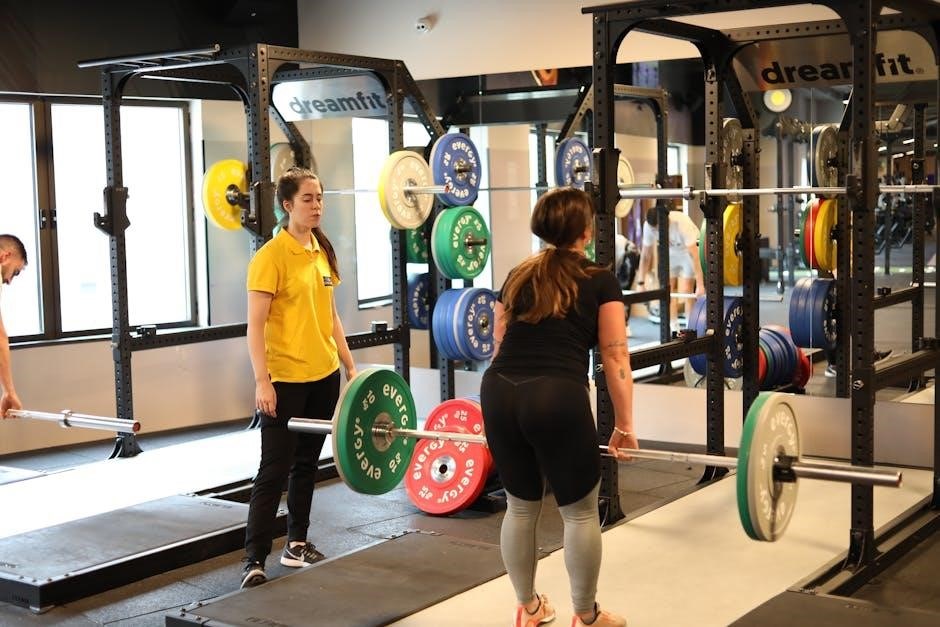
A comprehensive golf strength and conditioning program PDF includes lower body exercises vital for generating swing power. Squats, lunges, deadlifts, and glute bridges build strength in the legs and hips. These movements translate directly to increased clubhead speed and distance. Focus on explosive movements and proper technique, ensuring a stable base throughout the swing for optimal performance and reduced injury risk.
Upper Body Strength Training for Swing Control
A well-designed golf strength and conditioning program PDF prioritizes upper body strength for enhanced swing control. Exercises like rows, pull-ups, and shoulder presses build the necessary musculature. Rotational movements with resistance bands improve torso stability and power transfer. Strengthening the core alongside the upper body is crucial for maintaining posture and consistency throughout the golf swing.

Plyometrics for Golf
Plyometric exercises, detailed in a golf strength and conditioning program PDF, develop explosive power vital for maximizing distance and swing speed on the course.
Plyometric Exercises to Enhance Explosive Power
A comprehensive golf strength and conditioning program PDF will outline plyometrics like box jumps, depth jumps, and medicine ball throws. These drills train muscles to exert maximal force rapidly, mirroring the golf swing’s acceleration phase.
Focus on proper landing mechanics to minimize injury risk. Incorporate variations – single-leg hops, rotational throws – to target golf-specific movement patterns. Progress gradually, prioritizing quality over quantity, to build explosive power safely and effectively.
Integrating Plyometrics into a Golf Program
A well-designed golf strength and conditioning program PDF strategically integrates plyometrics. Begin with a solid strength base before introducing plyos. Implement them 2-3 times weekly, separated by rest days. Prioritize quality form and controlled movements. Phase in intensity – low-intensity drills initially, progressing to higher-impact exercises. Combine plyometrics with strength training and flexibility work for optimal results and injury prevention, enhancing swing speed and power.

Cardiovascular Conditioning for Golf
A golf strength and conditioning program PDF should include cardio. Enhanced stamina improves course management and late-round performance, vital for consistent play.
Endurance Training for Course Management
A comprehensive golf strength and conditioning program PDF prioritizes endurance to maintain swing mechanics throughout 18 holes. Long rounds demand sustained physical and mental fortitude. Incorporate steady-state cardio – jogging, cycling, or swimming – for 30-60 minutes, several times weekly. This builds aerobic capacity, delaying fatigue and improving focus. Interval training, mimicking golf’s bursts of activity followed by walking, further enhances course stamina. Consistent endurance work translates to better decision-making and consistent performance when fatigue sets in.
Interval Training for Golf-Specific Stamina
A well-designed golf strength and conditioning program PDF includes interval training to replicate the demands of a golf round. Alternate high-intensity bursts – simulating swings – with recovery periods mirroring walking between shots. Examples include sprint intervals followed by slow jogging, or hill repeats. This boosts anaerobic capacity, crucial for explosive power and resisting late-round fatigue. Interval work improves cardiovascular fitness and prepares the body for golf’s unique, intermittent exertion pattern, enhancing stamina and performance.

Sample Golf Strength and Conditioning Program (PDF Focus)
A comprehensive golf strength and conditioning program PDF outlines phased training, periodization, and weekly workouts. It’s designed to build strength, power, and endurance for optimal golf performance.
Program Structure: Phases & Periodization
A well-structured golf strength and conditioning program PDF utilizes phases – preparation, strength, power, and maintenance – aligning with the golfing season. Periodization strategically varies intensity and volume. The preparation phase focuses on building a base with higher reps and lower weight. Strength phase increases weight and decreases reps. Power phase emphasizes explosive movements. Finally, the maintenance phase sustains gains during competition, preventing overtraining and maximizing performance throughout the year.
Example Weekly Workout Schedule (PDF Content)
A sample golf strength and conditioning program PDF might include: Monday – Lower Body Strength (squats, lunges). Tuesday – Core & Stability (planks, rotations). Wednesday – Active Recovery (yoga, light cardio). Thursday – Upper Body Strength (rows, presses). Friday – Plyometrics (box jumps, medicine ball throws). Saturday – On-Course Simulation or Endurance. Sunday – Rest. This schedule, detailed within the PDF, prioritizes balanced development and recovery for optimal golfing performance.

Injury Prevention for Golfers
Golf’s repetitive motions necessitate preventative measures; a golf strength and conditioning program PDF details exercises to fortify muscles and minimize common injury risks.
Common Golf Injuries & Risk Factors
Golf frequently causes lower back pain due to rotational forces, alongside elbow (tennis/golfer’s elbow) and shoulder injuries from repetitive swings. Wrist strains and knee issues are also prevalent.
A comprehensive golf strength and conditioning program PDF addresses these risks by strengthening core muscles, improving flexibility, and enhancing swing mechanics.
Factors like poor technique, inadequate warm-up, and insufficient strength contribute to injury. Targeted exercises within the program mitigate these vulnerabilities, promoting a safer and more consistent game.
Preventative Exercises & Strategies
A well-designed golf strength and conditioning program PDF prioritizes preventative measures. Core stabilization exercises, like planks and rotational movements, protect the spine. Dynamic stretching improves range of motion, reducing muscle strains. Strengthening rotator cuff muscles safeguards the shoulder.
Regular foam rolling and targeted mobility drills address muscle imbalances. Proper warm-up routines prepare the body for the demands of the swing, minimizing injury risk.

Nutrition for Golf Performance
Golf performance hinges on proper fueling; a golf strength and conditioning program PDF should include nutritional guidance for sustained energy and optimal recovery on the course.
Fueling the Golf Body: Macronutrient Balance
Optimal golf performance requires a carefully balanced intake of macronutrients. A comprehensive golf strength and conditioning program PDF will detail carbohydrate needs for energy during rounds, protein for muscle repair and recovery, and healthy fats for sustained stamina. Prioritizing complex carbohydrates over simple sugars ensures stable energy levels, while adequate protein intake supports muscle development crucial for swing power. Understanding these ratios, tailored to individual needs, is paramount for maximizing athletic potential and minimizing fatigue throughout a tournament or practice session.
Hydration Strategies for Optimal Performance
Maintaining proper hydration is critical for golfers, impacting focus, endurance, and swing mechanics. A detailed golf strength and conditioning program PDF should outline a hydration plan, emphasizing consistent fluid intake before, during, and after play. Electrolyte replenishment is also vital, especially in warmer conditions, to prevent cramping and maintain optimal muscle function. Ignoring hydration can lead to decreased performance and increased risk of heat-related illness on the course.

Recovery and Regeneration
A golf strength and conditioning program PDF must prioritize recovery—active techniques, sleep, and stress management—to optimize adaptation and prevent overtraining.
Active Recovery Techniques for Golfers
Active recovery, detailed within a golf strength and conditioning program PDF, is crucial for minimizing muscle soreness and accelerating recovery. This includes low-intensity activities like walking, light stretching, and foam rolling. These techniques enhance blood flow, delivering vital nutrients to fatigued muscles;
Yoga and Pilates can improve flexibility and core stability, aiding in post-workout recuperation. Contrast therapy—alternating between hot and cold applications—can also reduce inflammation. Prioritizing these methods ensures golfers remain prepared for subsequent training sessions and optimal performance.
The Importance of Sleep and Stress Management
A comprehensive golf strength and conditioning program PDF emphasizes that adequate sleep—7-9 hours nightly—is paramount for muscle repair and hormone regulation. Chronic stress elevates cortisol, hindering recovery and impacting performance.
Implementing stress-reduction techniques like meditation, deep breathing exercises, or mindfulness is vital. Prioritizing mental well-being alongside physical training optimizes adaptation and prevents burnout, ensuring sustained progress and peak golfing ability.
Monitoring Progress & Program Adjustments
A golf strength and conditioning program PDF should detail tracking KPIs like swing speed and distance. Regular assessment allows for personalized adjustments, maximizing gains.
Tracking Key Performance Indicators (KPIs)
A comprehensive golf strength and conditioning program PDF emphasizes consistent KPI tracking. Essential metrics include clubhead speed (measured with radar technology), ball flight distance (total and carry), and swing efficiency.
Furthermore, monitor ground reaction forces, core stability scores, and range of motion improvements. Documenting these allows for objective evaluation of program effectiveness. Regularly assess these KPIs – weekly or bi-weekly – to identify plateaus and inform necessary adjustments to the training regimen, ensuring continued progress.
Adapting the Program Based on Individual Needs
A successful golf strength and conditioning program PDF isn’t one-size-fits-all. Individualize training based on initial assessments, identifying movement limitations and asymmetries. Consider the golfer’s skill level, handicap, and specific swing characteristics.
Adjust exercise selection, intensity, and volume based on progress and feedback. Prioritize addressing weaknesses while maintaining strengths. A flexible program, detailed within the PDF, ensures optimal results and minimizes injury risk for each golfer.
Resources for Golf Fitness (PDF Downloads)
Golf fitness PDFs provide detailed workout plans, exercise guides, and assessments. Access comprehensive strength and conditioning programs to elevate your game effectively.
Recommended Golf Fitness PDF Guides
Numerous PDF guides detail specialized golf fitness routines. Look for resources focusing on rotational power development, core stability, and flexibility – crucial for the swing. Comprehensive programs often include assessments to pinpoint weaknesses.
Seek guides from certified golf fitness professionals. These PDFs typically outline phased training plans, progressing from foundational movements to advanced plyometrics. Prioritize those with clear exercise demonstrations and modifications for varying fitness levels. Remember to consult a healthcare professional before starting any new exercise program.
Online Resources & Apps for Golf Conditioning
Several platforms offer digital golf fitness support, complementing a golf strength and conditioning program PDF. Apps provide exercise tracking, workout scheduling, and video demonstrations. Websites host articles and expert advice on swing-specific training.
Explore resources like MyTPI and Stack Golf for tailored programs. YouTube channels feature golf fitness professionals demonstrating effective exercises. Utilize these tools to enhance your understanding and adherence to your chosen conditioning plan, ensuring optimal results.