
Julius Caesar Questions and Answers PDF: An Overview
Julius Caesar study guides‚ often in PDF format‚ offer detailed analyses of Shakespeare’s play‚ featuring act-by-act questions to assess comprehension and critical thinking.
What is a Julius Caesar Q&A PDF?
A Julius Caesar Q&A PDF is a downloadable document designed to aid students and readers in understanding William Shakespeare’s historical tragedy. These PDFs typically contain summaries of each act‚ character analyses‚ and‚ crucially‚ a series of questions – often short answer or essay-based – intended to test comprehension.
They serve as interactive study tools‚ complementing classroom learning or independent exploration of the play. Many are specifically tailored to productions‚ like those by American Players Theatre‚ offering production-specific insights. These guides aren’t exhaustive Shakespeare resources‚ but focused supplements to deepen engagement with the text and its themes.
Purpose of Study Guides
The primary purpose of Julius Caesar study guides‚ including those in PDF format‚ is to enhance understanding and facilitate deeper analysis of Shakespeare’s complex play. They move beyond simple plot recall‚ encouraging critical thinking about character motivations‚ thematic elements‚ and historical context.
These guides support both individual study and classroom discussions‚ providing a framework for exploring the play’s nuances. They help students prepare for assessments‚ write essays‚ and engage more meaningfully with the text. Ultimately‚ a well-crafted study guide unlocks a richer appreciation for Shakespeare’s artistry and the enduring relevance of Julius Caesar.

Act I: Questions and Analysis
Act I questions focus on the initial tensions‚ including Flavius and Marullus’s actions‚ the soothsayer’s warning‚ and Cassius’s early attempts to sway Brutus.
The Initial Conflict: Flavius and Marullus
Questions regarding Flavius and Marullus explore their motivations for reprimanding the commoners celebrating Caesar’s triumph. Analysis delves into why they disapprove of public displays of joy for Caesar’s return from Spain‚ viewing it as a threat to the Roman Republic.

Study guides prompt consideration of their actions as foreshadowing the play’s central conflict – the struggle between individual ambition and the established order. Further inquiry examines how their attempt to diminish Caesar’s popularity establishes a tone of political unrest and sets the stage for the conspiracy against him. Understanding their perspective is crucial for interpreting the play’s opening scene.
The Soothsayer’s Warning: “Beware the Ides of March”
Questions focus on the significance of the soothsayer’s cryptic warning to Caesar‚ prompting analysis of its dramatic impact and foreshadowing of Caesar’s fate. Study guides explore why Caesar initially dismisses the warning‚ despite its ominous tone‚ and what this reveals about his character – his pride and belief in his own destiny.
Further inquiry examines the dramatic irony inherent in the scene‚ as the audience knows the impending danger while Caesar remains seemingly oblivious. Understanding the cultural context of Roman beliefs about omens and prophecies is key to interpreting the soothsayer’s role and the weight of his prediction.
Cassius’s Manipulation of Brutus
Questions delve into Cassius’s calculated efforts to sway Brutus to join the conspiracy‚ analyzing his use of flattery‚ appeals to Brutus’s honor‚ and fabricated concerns about Caesar’s ambition. Study guides examine how Cassius exploits Brutus’s noble nature and republican ideals to justify the assassination.
Analysis focuses on the persuasive techniques employed by Cassius‚ including his letters designed to create doubt and suspicion in Brutus’s mind. Comprehension questions assess understanding of Cassius’s motivations – jealousy and resentment – and how he strategically positions himself as a champion of Roman liberty to gain Brutus’s support.
Brutus’s Internal Conflict
Questions within study guides explore Brutus’s agonizing moral dilemma: whether to prioritize personal loyalty to Caesar or his perceived duty to Rome. Analysis centers on his soliloquies‚ revealing his struggle between affection and political conviction‚ and the justifications he constructs for participating in the conspiracy.
Comprehension questions assess understanding of Brutus’s character – his honor‚ idealism‚ and naiveté – and how these traits make him susceptible to Cassius’s manipulation. Guides examine the internal turmoil that plagues Brutus‚ ultimately leading him to believe that Caesar’s death is a necessary evil for the preservation of the Roman Republic.

Act II: Questions and Analysis
PDF study guides for Act II focus on the conspiracy’s development‚ Caesar’s fateful decision‚ and the ominous premonitions that foreshadow impending tragedy.
The Conspirators’ Plan
Study guides dedicated to Julius Caesar delve into the intricate planning stages undertaken by Cassius and his fellow conspirators. PDF resources pose questions examining the methods used to recruit members‚ like Brutus‚ and the justifications offered for their treacherous actions.
Analysis focuses on the conspirators’ strategy for assassinating Caesar‚ specifically their decision to strike during a Senate meeting. Questions explore the reasoning behind this choice‚ considering the public nature of the act and the potential for immediate control. Guides also assess the level of organization and foresight demonstrated by the group‚ highlighting potential flaws in their scheme.
Comprehension questions often address the ethical dilemmas faced by Brutus as he grapples with his loyalty to Caesar versus his perceived duty to Rome.
Caesar’s Decision to Go to the Senate
Julius Caesar study guides‚ particularly in PDF format‚ dedicate sections to Caesar’s fateful decision to attend the Senate despite numerous warnings. Questions explore his initial reluctance‚ fueled by Calpurnia’s disturbing dreams‚ and the factors influencing his ultimate choice.
PDF resources analyze Decius Brutus’s masterful manipulation of Caesar‚ focusing on how he reinterprets Calpurnia’s dream to flatter Caesar’s ambition and alleviate his fears. Questions assess the effectiveness of Decius’s persuasive tactics and Caesar’s susceptibility to flattery.
Guides often prompt students to consider whether Caesar’s pride and belief in his own destiny contributed to his willingness to ignore the ominous signs.
Calpurnia’s Dream and Warnings
Julius Caesar study guides‚ frequently available as PDFs‚ extensively cover Calpurnia’s terrifying dream and its significance. Questions focus on deciphering the symbolism within her vision – statues spouting blood‚ representing Caesar’s impending assassination – and its emotional impact.
PDF resources analyze Calpurnia’s desperate pleas to Caesar to remain home‚ highlighting her genuine fear for his safety and her role as a voice of caution. Questions explore the contrast between her intuition and Caesar’s ambition.
Study guides often ask students to evaluate how Calpurnia’s warnings foreshadow the tragic events to come and contribute to the play’s atmosphere of suspense.
Decius Brutus’s Persuasion of Caesar
Julius Caesar study guides‚ often in PDF format‚ dedicate significant attention to Decius Brutus’s masterful manipulation of Caesar. Questions delve into his strategic use of flattery and altered interpretations of Calpurnia’s dream to sway Caesar’s decision.
PDF resources analyze Decius’s skillful reframing of the dream‚ transforming ominous portents into symbols of Caesar’s power and destiny‚ appealing to his ambition. Questions explore the rhetorical techniques employed by Decius.
Study guides frequently ask students to assess the effectiveness of Decius’s persuasion and its role in sealing Caesar’s fate‚ highlighting the dangers of unchecked ambition and deceptive rhetoric.

Act III: Questions and Analysis

PDF study guides focus on Act III’s pivotal events—Caesar’s assassination and Antony’s speech—with questions examining motives‚ rhetoric‚ and consequences.
The Assassination of Caesar
Study guides dedicated to Julius Caesar extensively analyze the assassination scene in Act III‚ posing questions about the conspirators’ actions and justifications. PDFs explore the dramatic irony present as Caesar walks towards his fate‚ unaware of the impending betrayal.
Questions often delve into the motivations of each assassin – Brutus’s belief in protecting Rome versus Cassius’s personal resentments. Comprehension checks assess understanding of the scene’s staging and the symbolic weight of Caesar’s death. Analysis questions prompt students to consider the immediate aftermath and the shift in power dynamics following the assassination‚ setting the stage for the play’s tragic conclusion.
Mark Antony’s Speech at Caesar’s Funeral
Julius Caesar study guides dedicate significant attention to Antony’s masterful funeral oration‚ providing questions focused on rhetorical devices and persuasive techniques. PDFs dissect how Antony manipulates the crowd‚ subtly turning them against the conspirators despite initially praising their actions.
Comprehension questions assess understanding of Antony’s use of irony‚ repetition‚ and appeals to emotion. Analytical prompts explore the speech’s impact on the Roman populace and its role in inciting rebellion. Guides often include close reading exercises‚ examining key phrases and their effect on the audience‚ highlighting Antony’s political shrewdness.
The Formation of the Second Triumvirate
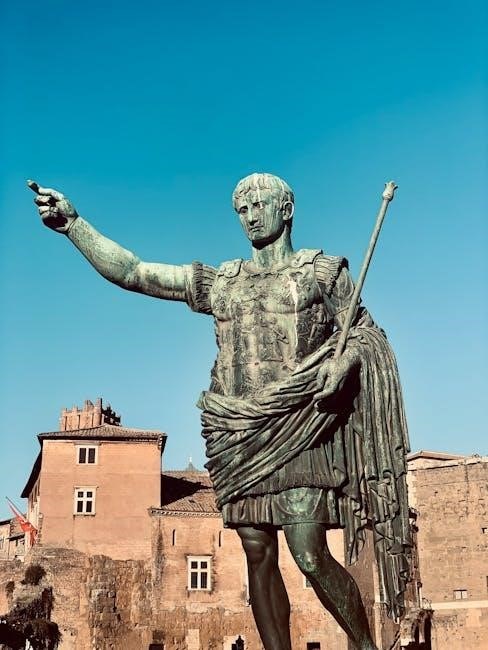
Julius Caesar study guides‚ particularly those in PDF format‚ thoroughly examine the establishment of the Second Triumvirate – Octavius‚ Mark Antony‚ and Lepidus – and its implications. Questions focus on the power dynamics between these leaders and their motivations for forming an alliance following Caesar’s assassination.
PDFs often include analytical prompts exploring how the Triumvirate’s rise signifies a departure from the Roman Republic’s ideals. Comprehension questions assess understanding of their initial goals‚ methods of consolidating power‚ and the eventual conflicts that arose within the alliance‚ setting the stage for further political upheaval.

Act IV: Questions and Analysis
PDF study guides for Julius Caesar delve into Act IV with questions about Brutus and Cassius’s fracturing relationship‚ Caesar’s ghost‚ and battle preparations.
Brutus and Cassius’s Quarrel
Julius Caesar study guides’ PDF sections on Act IV frequently explore the intense quarrel between Brutus and Cassius. Questions focus on the reasons behind their escalating conflict – accusations of corruption‚ differing philosophies on leadership‚ and personal resentments.
Analysis prompts examine how this dispute weakens the conspirators’ cause and foreshadows their downfall at Philippi. Guides often ask students to identify specific lines revealing each man’s character flaws and motivations during this pivotal scene. Comprehension questions assess understanding of the power dynamics and the irreparable damage to their alliance‚ ultimately contributing to their tragic fates.
The Ghost of Caesar
Julius Caesar study guides’ PDF sections dedicated to Act IV delve into the significance of Caesar’s ghost appearing to Brutus. Questions explore the ghost’s purpose – a warning‚ a manifestation of Brutus’s guilt‚ or a supernatural omen foreshadowing defeat.
Analysis prompts often ask students to interpret the ghost’s pronouncement of “I shall see thee at Philippi‚” and its psychological impact on Brutus. Comprehension questions assess understanding of how this encounter intensifies Brutus’s internal conflict and contributes to his growing sense of dread‚ ultimately influencing his decisions leading up to the final battle.
Preparation for the Battle of Philippi
Julius Caesar study guides’ PDF sections covering Act IV frequently include questions about the logistical and emotional preparation for the Battle of Philippi. These questions examine the strained relationship between Brutus and Cassius‚ highlighted by their quarrel over strategy and accusations of corruption.
PDFs often prompt analysis of the characters’ attempts to raise funds and gather troops‚ revealing their diminishing resources and waning support. Comprehension questions focus on the significance of the omens and prophecies that plague the conspirators‚ foreshadowing their impending doom and the futility of their cause.

Act V: Questions and Analysis
PDF study guides for Julius Caesar’s Act V explore the tragic Battle of Philippi‚ focusing on character fates and Antony’s concluding speech through detailed questions.
The Battle of Philippi
Julius Caesar study guides’ Act V sections dedicate significant attention to the Battle of Philippi‚ a pivotal clash determining Rome’s future. PDF resources pose questions examining Brutus and Cassius’s military strategies‚ and the reasons behind their ultimate defeat.
Analysis delves into the characters’ motivations during battle – honor versus political ambition – and the symbolic weight of their deaths. Questions often explore the foreshadowing present throughout the play that leads to this devastating conflict. Comprehension checks assess understanding of the battle’s impact on the Second Triumvirate and the play’s overall themes of fate and consequence.
Brutus’s Death
Julius Caesar study guides extensively cover Brutus’s death in Act V‚ framing it as a central moment of tragic irony. PDF resources present questions analyzing his decision to fall on his sword rather than be captured‚ exploring themes of honor and Roman virtue.
Comprehension questions focus on the significance of Strato assisting Brutus‚ and the impact of his death on the remaining characters. Analysis examines how Brutus’s final speech reflects his internal conflict and justification for his actions. Guides often ask students to compare Brutus’s death to Caesar’s assassination‚ highlighting the play’s cyclical nature.
Cassius’s Death
Julius Caesar study guides dedicate significant attention to Cassius’s death‚ typically explored through PDF question sets. These resources analyze his self-inflicted wound‚ mistakenly believing Pindarus had killed Titinius‚ and the resulting despair. Questions probe the motivations behind his actions‚ linking them to his jealousy and resentment towards Caesar.
PDFs often include analysis of Cassius’s final words and their impact on the play’s themes of fate and honor. Comprehension questions assess understanding of the circumstances surrounding his death and its contribution to the tragic downfall of the conspirators. Guides encourage students to compare Cassius’s death to Brutus’s.
The Aftermath and Antony’s Final Speech
Julius Caesar study guides‚ frequently available as PDFs‚ heavily feature questions regarding the play’s resolution and Antony’s concluding speech. These resources examine Antony’s portrayal of Brutus as “the noblest Roman of them all‚” prompting analysis of its sincerity and political intent.
PDF question sets explore the speech’s impact on restoring order and establishing Antony’s authority. Comprehension questions assess understanding of the speech’s rhetorical devices and its effect on the audience. Guides often ask students to contrast Antony’s speech with his earlier funeral oration‚ highlighting his evolving strategies.

Key Characters and Their Motivations
Julius Caesar PDFs explore character motivations – Caesar’s ambition‚ Brutus’s honor‚ and Cassius’s jealousy – through targeted questions‚ fostering deeper textual understanding.
Julius Caesar: Ambition and Power
Julius Caesar study guides‚ particularly those in PDF format‚ dedicate significant attention to exploring Caesar’s driving ambition and relentless pursuit of power. Questions within these guides frequently probe the extent of his ambition‚ examining whether it was a legitimate desire to improve Rome or a dangerous lust for autocratic rule.
PDFs often present textual evidence – like his disregard for warnings and acceptance of honors – prompting analysis of how Caesar’s actions fueled the conspiracy against him. Students are challenged to consider the play’s commentary on the corrupting influence of power and the dangers of unchecked ambition‚ using specific examples from the text to support their interpretations.
Brutus: Honor and Duty
Julius Caesar study guides‚ especially PDF versions‚ heavily analyze Brutus’s complex motivations rooted in honor and a perceived sense of duty to Rome. Questions frequently focus on whether Brutus’s actions were truly noble or tragically misguided‚ prompting students to dissect his internal conflict.
PDFs often include prompts examining Brutus’s adherence to Stoic philosophy and how it influenced his decision to join the conspiracy. Analysis centers on whether he prioritized abstract ideals over practical consequences‚ and if his commitment to republican principles justified the assassination. Guides encourage close reading of his soliloquies to understand his moral reasoning.
Cassius: Jealousy and Resentment
Julius Caesar study guides‚ particularly in PDF format‚ dedicate significant attention to Cassius’s character‚ exploring the driving forces of his jealousy and resentment towards Caesar. Questions within these guides often probe the extent to which Cassius manipulates Brutus‚ fueled by his own ambition and perceived inferiority.
PDF resources frequently ask students to analyze Cassius’s rhetoric and identify instances where he appeals to Brutus’s fears and insecurities. Discussions center on whether Cassius genuinely believes Caesar poses a threat to Rome‚ or if his motives are purely self-serving. Guides encourage examining his pragmatic‚ yet cynical‚ worldview.